Showing posts with label Top News Stories of The Day. Show all posts

Wednesday, June 1, 2016

House Speaker Ryan of Republican is not ready to support Trump


Ryan, the speaker of the U.S. House of Representatives, said conservatives wanted to know if Trump shares their values.
About Ryan
The top elected Republican, Paul Ryan, said on Thursday he was not ready to endorse Donald Trump, a sign of the challenges the party's presumptive presidential nominee faces rallying the Republican establishment behind his White House bid.
Trump, who has built a huge following with an anti-establishment message, shot back at Ryan in a statement.
"I hope to support our nominee, I hope to support his candidacy fully," Ryan said on CNN. "At this point, I'm just not there right now."
"I am not ready to support Speaker Ryan's agenda. Perhaps in the future we can work together and come to an agreement about what is best for the American people," he said.
"We respect Speaker Ryan’s opinion and believe that since the primary ended early we will have time to unify. We anticipate the two meeting soon to begin to help unite the party," said RNC spokeswoman Lindsay Walters.
The Republican National Committee, under pressure to unify the party or face an electoral rout in the Nov. 8 election, said Ryan and Trump were expected to meet soon. It added that "only a united Republican Party will be able to beat Hillary Clinton."
Many Republicans have grappled this week with whether to support Trump, who has deviated from the party line on trade and upset the party establishment with offensive comments about women and immigrants. Trump on Thursday announced a new campaign finance chairman in response to questions about his readiness for a general election race.
Trump's last remaining rivals in the Republican race, U.S. Senator Ted Cruz and Ohio Governor John Kasich, dropped out this week, clearing the New York billionaire's path to be picked as the presidential nominee. His will likely face Clinton, the Democratic front-runner, in the Nov. 8 general election.
https://healthcareforallmenwomenorkids.blogspot.com/2016/05/new-alina-skin-care-ultimate-reduce.html

Tuesday, May 17, 2016

Breaking News of The Day: Clinton looks to bounce back with Kentucky win

Hillary Clinton
Hillary Clinton hopes to avoid another round of primary defeats that, while doing little to diminish her delegate lead over Bernie Sanders, magnify her difficulty in unifying the Democratic Party.
Primaries in Oregon and Kentucky, which vote on Tuesday, could extend her losses after the Vermont senator carried Indiana and West Virginia earlier this month.

While Sanders is expected to win in Oregon, the Clinton campaign sees an opportunity in Kentucky, a state she carried easily in her primary campaign eight years ago.
Throughout the campaign, Clinton has struggled with working-class, white voters, however, particularly in communities hit hard by manufacturing job losses in the Rust Belt. It’s a group that's also boosting Republican Donald Trump’s candidacy.

Over the weekend, Clinton made several stops in Kentucky, including drop-ins at churches, and she continued her busy schedule on Monday. Despite an earlier decision to shift resources to general election swing states, the campaign is running television ads in the Bluegrass State.
On Monday, Clinton dropped by a smoke-filled diner in Paducah. “I want to help bring back the kind of economy that worked for everybody in the 1990s,” she told the audience, which included at least one Trump supporter.

Entering Tuesday's contests, Clinton leads Sanders by nearly 300 pledged delegates. When super delegates — elected officials and party leaders free to support either candidate — are factored in, her lead is much larger and brings her to within 150 delegates away of the 2,383 needed to clinch the Democratic nomination, according to the Associated Press. In the final round of state primaries next month, Clinton holds a 10-point lead in California, according to the Real Clear Politics average of polls, where 475 pledged delegates will be at stake.

Yet Sanders has repeatedly said he’ll fight all the way to the Philadelphia convention in July. And he’s showing he’ll battle for every last delegate, jetting on Monday to Puerto Rico, which holds a caucus on June 5.
Appalachian states, including West Virginia and Kentucky, had been loyal to Clinton, who won there by big margins over then-senator Barack Obama in 2008. Her husband also carried them in his 1992 and 1996 campaigns, and she’s been placing increased emphasis on his role in a possible Hillary Clinton administration, betting that he remains a popular figure in the region.

“I’ve already told my husband that, if I’m so fortunate to be president and he will be the first gentleman, I’ll expect him to go to work,” she told the Kentucky diners Monday.
On Sunday, she said the former president would be “in charge of economic revitalization,” particularly in hard-hit areas like Appalachian coal country. She’s also touting her plan for coal miners, including investments to create new jobs in infrastructure and repurposing mines and protecting miners’ health insurance and retirement programs.

While the outcome of the Kentucky primary won’t matter much in the overall delegate battle between Clinton and Sanders (Democrats award delegates proportionally), it could highlight the challenges ahead for Clinton in a potential match up with Trump. In exit polls of West Virginia, a third of those who voted in the Democratic contest said they planned to back Trump in November.
Part of Clinton's challenge may stem from comments she made at a town hall meeting in Ohio, when the Democratic front-runner said she would "put a lot of coal miners and coal companies out of business." She would later apologize.

Meantime, Clinton now rarely mentions Sanders in her stump speeches, making clear that her chief target is Trump, the presumptive Republican nominee, whom she’s portraying as a “loose cannon.” Separately, the main super PAC supporting her, Priorities USA, is planning to begin $6 million in anti-Trump ads starting on Wednesday.

Other high-profile Democrats have also stepped in to do battle with Trump.
After a commencement address on Saturday at Bridgewater State University, Massachusetts Sen. Elizabeth Warren called Trump “a truly dangerous man.” Warren has also engaged in heated Twitter exchanges with Trump. On Sunday, President Obama, who’s largely stayed on the sidelines until a nominee is official, waded into the race during a commencement speech at Rutgers University.

“In politics and in life, ignorance is not a virtue,” he said, in an apparent reference to Trump. “That’s not challenging political correctness. That’s just not knowing what you are talking about.’”

Top News Stories of the day: Two bombings in Baghdad kill 44, say police, medical sources

A spokesman for Baghdad Operations Command told state television the attacker in al-Shaab, a predominately Shi'ite Muslim area, had set off an explosives-filled vest in coordination with a planted bomb. Initial investigations revealed the attacker had been a woman, he said.

There was no immediate claim of responsibility for the attacks. Islamic State h
as claimed bombings in and around the capital last week that killed 100 people and sparked popular anger against the government for failing to ensure security.

Two bombings hit Baghdad on Tuesday, killing at least 44 people and wounding more than 90, police and medical sources said, following the bloodiest week of attacks inside the capital so far this year.
A suicide bombing in a marketplace in the northern district of al-Shaab killed 38 people and wounded more than 70, while a car bomb in the southern neighborhood of al-Rasheed left six dead and another 21 wounded, the sources said.

Security has improved somewhat in the capital in recent years, even as Islamic State fighters seized swathes of the country almost to the outskirts of Baghdad's ramparts.

Prime Minister Haider al-Abadi has said a political crisis sparked by his attempt to reshuffle the cabinet in an anti-corruption bid was hampering the fight against Islamic State and creating space for more insurgent attacks on the civilian population.

But the prospect that the capital could return to the days when suicide bombings killed scores of people every week adds to pressure on Abadi to resolve the political crisis.

Breaking News: Transgender bathroom rule a matter of dignity, Obama says

It was his first public comment on the issue since the Department of Education announced the new guidelines last Friday.

"Anybody who has been in school, in high school, who has been a parent should realize that kids who are sometimes in the minority — kids who have a different sexual orientation or are transgender — are subject to a lot of bullying, potentially," Obama told the web site Buzzfeed Monday.

New federal rules on school bathrooms are designed to protect transgender students from bullying, President Obama said Monday.

The federal guidance came the same week that the Department of Justice and North Carolina exchanged lawsuits over that state's new bathroom law. It requires people to use the public restrooms that correspond to the sex observed on their birth certificate.

"They are vulnerable, and I think it’s part of our obligation as a society to make sure everybody is treated fairly, and our kids are all loved and protected, and that their dignity is affirmed," he said.

 But the White House has also acknowledged that Obama was regularly consulted on the guidelines, and they reflect his own values. "I think it is fair to say — and I think it's important — that this kind of announcement reflects the President’s strongly held view about the need to prevent discrimination, but also the need to protect the safety and dignity of every student in America," White House Press Secretary Josh Earnest said last week.

The new guidelines require schools to allow transgender students to use the restroom and locker rooms that correspond to their chosen gender. And by invoking the sex discrimination law known as Title IX, the rules carry with them the threat of federal enforcement — including a loss of federal education funds. A number of state-level Republican officials have called the move federal overreach that violates the right of each state to determine education policy.

" We said it is our view that you should treat these kids with dignity," Obama said. "Ultimately, depending on how these other lawsuits go, courts will affirm or reject how we see the issue."
Obama said that guidance came from the Department of Education in response to questions from schools about how to handle the bathroom accommodations, and was an effort to advise school districts on "best practices" on a range of transgender issues.


Monday, April 18, 2016

Quake kills 272 along devastated Ecuador coast

The death toll from Ecuador's biggest earthquake in decades soared to 272 on Sunday as survivors cobbled together makeshift coffins to bury loved ones, lined up for water and sought shelter beside the rubble of their shattered homes.
The 7.8 magnitude quake struck off the Pacific coast on Saturday and was felt around the Andean nation of 16 million people, causing panic as far away as the highland capital Quito and destroying buildings, bridges and roads.
"Ecuador has been hit tremendously hard... This is the greatest tragedy in the last 67 years," said a shaken President Rafael Correa, who rushed back to Ecuador from a visit to Italy.
"There are signs of life in much of the rubble and that is the priority," Correa said in a televised address to the nation.
He confirmed 272 deaths and 2,068 injured and said he feared those figures would increase.
Coastal areas nearest the epicenter were hit hardest, especially Pedernales, a rustic tourist spot with beaches and palm trees now laden with debris from its pastel-colored houses.
Dazed residents recounted a violent shake, followed by a sudden collapse of buildings that trapped people in wreckage.
"You could hear people screaming from the rubble," Agustin Robles said as he waited in a line of 40 people for water outside a stadium in Pedernales. "There was a pharmacy where people were stuck and we couldn't do anything."
Authorities said there were more than 160 aftershocks, mainly in the Pedernales area. A state of emergency was declared in six provinces.
The quake has piled pain on the economy of OPEC's smallest member, already reeling from low oil prices, with economic growth this year projected at near-zero.
RUBBLE, RAIN, PRISON BREAK
As darkness set in and rain began to fall, survivors bundled up to spend the night next to their destroyed homes. Many had earlier queued up for food, water and blankets outside the blue-and-white stadium.
Inside the stadium, tents housed the dead and medical teams treated hundreds of survivors. About 91 people died in Pedernales and some 60 percent of houses were destroyed, according to Police Chief General Milton Zarate.
"We heard the warning so luckily we were in the street because the entire house collapsed. We don't have anything," said Ana Farias, 23, the mother of 16-month-old twins, as she collected water, food and blankets from rescuers.
"We're going to have to sleep outside today."
Other survivors hammered together shelters in empty lots. Police patrolled the dark town, where power remained off, while some rescuers plowed on.
Locals used a small tractor to remove rubble and also searched with their hands for trapped people. Women cried after a corpse was pulled out.
In Portoviejo, around 180 kilometers (112 miles) south of Pedernales, authorities said some 130 inmates escaped from the El Rodeo prison after its walls collapsed. More than 35 have been recaptured.

In Ecuador's largest city, Guayaquil, rubble lay in the streets and a bridge fell on top of a car
"It was horrible. It was as if it was going to collapse like cardboard," said Galo Valle, 56, who was guarding a building in the city where windows fell out and parts of walls broke.
"I prayed and fell to my feet to ask God to protect me."
About 13,500 security force personnel were mobilized to keep order around Ecuador, and $600 million in credit from multilateral lenders was immediately activated for the emergency, the government said.
REFINERY SHUT, GALAPAGOS UNSCATHED
It has been decades since the government dealt with an earthquake of this magnitude. In a 1979 disaster, 600 people were killed and 20,000 injured, according to the U.S. Geological Survey.
According to the country's Geophysics Institute, 230 aftershocks have been registered after the subduction, an event in which one tectonic plate goes under another.(http://goo.gl/smIFMb)
Venezuela, Chile and Mexico were sending personnel and supplies, the left-leaning Correa government said. The Ecuadorean Red Cross mobilized more than 800 volunteers and staff and medical charity Medecins Sans Frontieres said it was sending a team from Colombia.
Canadian Prime Minister Justin Trudeau said on Twitter that two Canadians were among the dead and that the "scope of the devastation in Ecuador is shocking."
The U.S. State Department said in an email that it was working to confirm reports of Americans injured in the quake, although it had no reports of any U.S. citizens killed.
U.S. Secretary of State John Kerry offered assistance.
Although tsunami warnings were lifted, coastal residents were still urged to seek higher ground in case tides rise.
The government said oil production was not affected but closed its main refinery of Esmeraldas, located near the epicenter, as a precaution. It was likely to restart soon.
Residents on the Galapagos islands far off Ecuador's coast, home to numerous rare species, said they had not been affected by the quake.
The Ecuadorean quake followed two large and deadly quakes that struck Japan since Thursday. Both countries are located on the seismically active "Ring of Fire" that circles the Pacific, but according to the U.S. Geological Survey large quakes separated by such distances would probably not be related.
(Additional reporting by Alexandra Valencia and Cristina Munoz in Quito, Javier Andres Rojas in Pedernales, Yuri Garcia in Guayaquil, Guillermo Granja in Manta, Girish Gupta in Bogota; Writing by Andrew Cawthorne and Alexandra Ulmer; Editing by Bill Trott and Mary Milliken)


Source: Reuters

Sunday, April 17, 2016

Major earthquake rocks Ecuador, kills at least 41

Ecuador's strongest earthquake in decades, a 7.8 magnitude tremor, struck off the Pacific coast on Saturday, killing at least 41 people and causing damage near the epicenter as well as in the largest city of Guayaquil.
President Rafael Correa declared a national emergency and urged the Andean nation's 16 million people to stay calm.
"Our infinite love to the families of the dead," he said on Twitter, while cutting short a trip to Italy to return home.
Authorities urged people to evacuate coastal areas for fear of rising tides. Alarmed residents streamed into the streets of the highland capital Quito, hundreds of kilometers (miles) away, and other towns across the nation.
The government said the death toll would likely rise and damages were "serious," especially in the western coastal areas nearest the quake and in Guayaquil.
"Unfortunately, up to the moment there are 41 citizens who have lost their lives," said Vice President Jorge Glas, noting that it was the strongest quake to hit Ecuador since 1979.
Get the latest on Ecuador quake on BreakingNews.com
The quake struck early evening at a depth of 20 km (12.4 miles), and was felt all around the country.
Guayaquil Mayor Jaime Nebot, who was traveling in Spain, said on his Facebook page he would coordinate recovery operations from where he was.
Official details on the damage to Guayaquil, a frequent departure point for foreign tourists visiting the Galapagos islands made famous by Charles Darwin, were slow to emerge.
Social media pictures showed a collapsed bridge in the city and minor damage to the lobby of a hotel, as well as images of a collapsed control tower at an airport in the city of Manta.
"I was in my house watching a movie and everything started to shake. I ran out into the street and now I don't know what's going to happen," said Lorena Cazares, 36, a telecommunications worker in Quito.

REFINERY CLOSED
Parts of the capital were without power or telephone service, with many communicating only via WhatsApp. Photos on social media showed cracks in the walls of shopping centers.
The capital's municipal government later said power had been restored and there were no reports of casualties in the city.
The Pacific Tsunami Warning Center said tsunami waves reaching 0.3 to 1 meter (one to three feet) above tide level were possible for some coastal areas of Ecuador.
State officials said the OPEC nation's oil production was not affected by the quake but that the principal refinery of Esmeraldas, located near the epicenter, had been halted as a precaution.
"At first it was light, but it lasted a long time and got stronger," said Maria Jaramillo, 36, a resident of Guayaquil, describing windows breaking and pieces falling off roofs.
"I was on the seventh floor and the light went off in the whole sector, and we evacuated. People were very anxious in the street ... We left barefoot."
Across the Pacific in Japan, a 7.3 magnitude tremor struck Kumamoto province early Saturday, killing at least 32 people, injuring about a thousand and causing widespread damage, in the second major quake to hit the island of Kyushu in just over 24 hours. The first, late on Thursday, killed nine. (Additional reporting by Cristina Munoz in Quito, Yuri Garcia in Guayaquil; Writing by Brian Ellsworth and Andrew Cawthorne; Editing by James Dalgleish and Mary Milliken)


SOURCE: Reuters

Saturday, April 16, 2016

POPE MAKES PROVOCATIVE TRIP TO GREECE AS EU DEPORTS MIGRANTS

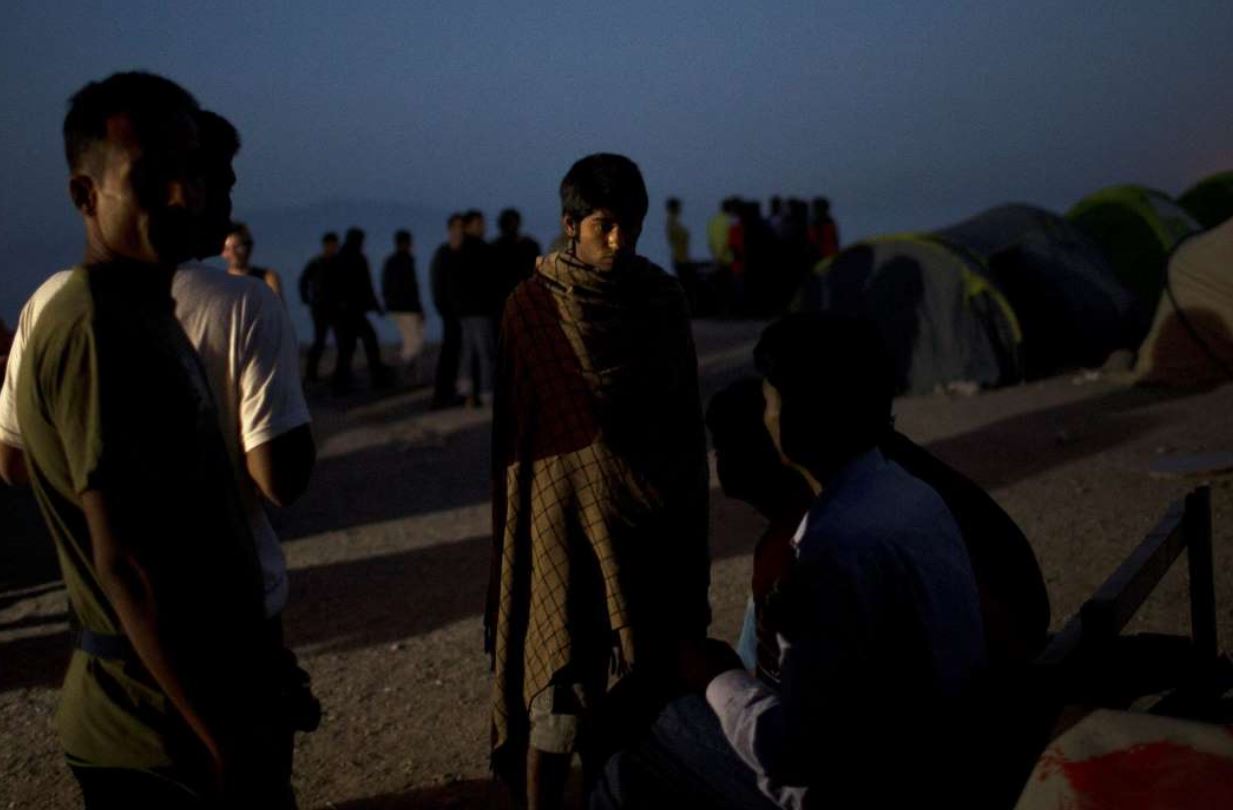
Pope Francis is known for his symbolic gestures, but even by his standards, his visit to a Greek refugee detention center as the European Union implements a controversial deportation plan is as provocative as any he has undertaken.
Francis and the spiritual leader of the world's Orthodox Christians will spend nearly an hour Saturday greeting some 250 refugees stuck on the Greek island of Lesbos. They will lunch with eight of them to hear their stories of fleeing war, conflict and poverty and hopes for a better life in Europe. And they will toss floral wreathes into the sea to pray for those who never made it.
It's a gesture Francis first made when he visited the Italian island of Lampedusa in the summer of 2013, his first trip outside Rome as pope, after a dozen migrants died trying to reach the southern tip of Europe. He made a similar gesture more recently at the U.S.-Mexican border, laying a bouquet of flowers next to a large crucifix at the Ciudad Juarez border crossing in memory of migrants who died trying to reach the U.S.
"He is slightly provocative," said George Demacopoulos, chair of Orthodox Christian studies at the Jesuit-run Fordham University in New York. Citing Francis' Mexico border visit in February, in the heat of a U.S. presidential campaign where illegal immigration took center stage, he added: "He is within his purview to do so, but that was a provocative move."
The Vatican insists Saturday's visit is purely humanitarian and religious in nature, not political or a "direct" criticism of the EU plan.
But spokesman the Rev. Federico Lombardi told reporters that Francis' position on Europe's "moral obligation" to welcome refugees is well-known, and that the EU-Turkey deportation deal certainly has "consequences on the situation of the people involved."
The Vatican official in charge of migrants, Cardinal Antonio Maria Veglio, was even more explicit, saying the EU-Turkey plan essentially treats migrants as merchandise that can be traded back and forth and doesn't recognize their inherent dignity as human beings.
The March 18 EU-Turkey deal stipulates that anyone arriving clandestinely on Greek islands on or after March 20 will be returned to Turkey unless they successfully apply for asylum in Greece. For every Syrian sent back, the EU will take another Syrian directly from Turkey for resettlement in Europe. In return, Turkey was granted concessions including billions of euros to deal with the more than 2.7 million Syrian refugees living there, and a speeding up of its stalled accession talks with the EU.
Human rights groups have denounced the deal as an abdication of Europe's obligations to grant protection to asylum-seekers.
The son of Italian immigrants to Argentina, Francis has made the plight of refugees, the poor and downtrodden the focus of his ministry as pope, denouncing the "globalization of indifference" that the world shows the less fortunate.
Aside from the inherently political nature of the trip, it also has a significant religious dimension. Francis will be visiting alongside the spiritual leader of the world's 300 million Orthodox Christians, Ecumenical Patriarch Bartholomew, and the head of the Orthodox Church of Greece, Athens Archbishop Ieronymos II.
Lombardi said the ecumenical significance of such a meeting was "obvious" — and he credited Greece's politicians with their willingness to let the religious leaders take center stage as an "appreciated" gesture of discretion.


Source: AP

Thursday, April 14, 2016

Cruz likely to block Trump on a second ballot at the GOP convention

Republican presidential candidate Ted Cruz is close to ensuring that Donald Trump cannot win the GOP nomination on a second ballot at the party’s July convention in Cleveland, scooping up scores of delegates who have pledged to vote for him instead of the front-runner if given the chance.
The push by Cruz means that it is more essential than ever for Trump to clinch the nomination by winning a majority of delegates to avoid a contested and drawn-out convention fight, which Trump seems almost certain to lose.
The GOP race now rests on two cliffhangers: Can Trump lock up the nomination before Cleveland? And if not, can Cruz cobble together enough delegates to win a second convention vote if Trump fails in the first?
Track the Republican delegate count
Track the Democratic delegate count
Trump’s path to amassing the 1,237 delegates he needs to win outright has only gotten narrower after losing to Cruz in Wisconsin and other recent contests, and would require him to perform better in the remaining states than he has to this point.
In addition, based on the delegate selections made by states and territories, Cruz is poised to pick up at least 130 more votes on a second ballot, according to a Washington Post analysis. That tally surpasses 170 delegates under less conservative assumptions — a number that could make it impossible for Trump to emerge victorious.
That is why the race centers on the fevered hunt for delegates across the country. The intensity of the fight has sparked another round of caustic rhetoric — including allegations from party leaders that Trump supporters are making death threats.
“It’s unfortunate politics has reached a new low. These type of threats have no place in politics,” said Kyle Babcock, a Republican delegate from Indiana’s 3rd Congressional District. He received an email from a Trump supporter who warned, “Think before you take a step down the wrong path.”
Cruz’s chances rest on exploiting a wrinkle in the GOP rule book: that delegates assigned to vote for Trump at the convention do not actually have to be Trump supporters. Cruz is particularly focused on getting loyalists elected to delegate positions even in states that the senator from Texas lost.
On Wednesday in Indiana, for example, Republican leaders are finalizing a delegate slate that will include party activists unlikely to vote for Trump in the state’s May primary. Cruz also is poised to sweep Wyoming’s 26 delegates this weekend in a state where Trump’s campaign did not seriously compete. In Arkansas, Cruz supporters are exploring ways to topple Trump when delegates are chosen next month. And Sen. Marco Rubio (R-Fla.) has refused to release 171 delegates he won when he was in the race, signaling that he may contribute to the anti-Trump push in Cleveland.
Cruz said this week that he thinks the odds of a contested convention are “very high.”
“In Cleveland, I believe we will have an enormous advantage,” he told radio talk-show host Glenn Beck.
Trump has a commanding lead in total delegates and the overall vote total, but has complained that Republican leaders are conspiring against him in a bid to silence his supporters.
“The RNC should be ashamed of itself for allowing this to happen,” Trump said Tuesday night while campaigning in Rome, N.Y.
Paul Manafort, a senior adviser to Trump, said in an interview that he is confident Cruz will never have a chance to convert Trump delegates.
“Just because [Cruz] has won some delegates in a state where we have the delegates voting for us is not relevant until and unless there’s a second ballot,” Manafort said. “There’s not going to be a second ballot.”
As the battle for delegates has intensified, so too have emotions. Craig Dunn, who was elected Saturday as a Republican delegate from Indiana’s 4th Congressional District, said he has received several threatening phone calls and emails after criticizing Trump in recent news reports.
“When they reference burials and your family in the same email, and telling you that you’re being watched, that’s concerning,” he said.
In Colorado, Republicans are planning a rally Friday to call attention to threats made against GOP chairman Steve House. He said his office received 3,000 phone calls “with many being the trashiest you can imagine” after a state party convention last weekend awarded all 34 delegates to Cruz.
“Shame on the people who think somehow that it is right to threaten me and my family over not liking the outcome of an election,” he wrote on Facebook.
Cruz told Beck on Tuesday that threats made by Trump supporters, including those made by the businessman’s longtime confidant Roger Stone, are “the tactic of union thugs. That is violence. It is oppressive.”
Stone recently told an interviewer that Trump supporters would track down delegates at their hotel rooms in Cleveland if they break away from Trump.
Manafort said that “it’s certainly not part of our policy” to threaten violence, but accused “abusive” Cruz supporters of confronting Trump’s backers at party meetings nationwide.
When the presidential nomination vote is held at the convention, 95 percent of the delegates will be bound to the results in their states for the first vote, giving Trump his best shot at securing a majority.
But if Trump falls short, the convention will cast a second ballot in which more than 1,800 delegates from 31 states — nearly 60 percent of the total — will be unbound and allowed to vote however they want. By the third round, 80 percent of the delegates would be free, sparking a potential free-for-all that could continue for several more rounds.
That is the crux of the state-by-state battle that is playing out over the next two months as Republicans gather at the precinct, county, congressional district and statewide level to choose convention delegates.
“If we go into a contested convention, we’re gonna have a ton of delegates, Donald is gonna have a ton of delegates, and it’s gonna be a battle in Cleveland to see who can earn a majority of the delegates that were elected by the people,” Cruz told a meeting of the Republican Jewish Coalition in Las Vegas on Saturday.
He predicted that the first ballot “will be the highest vote total Donald Trump receives. And on a subsequent ballot, we’re gonna win the nomination.”
If Cruz prevails, it will be because of what supporters are doing for him nationwide with what they say is little direct input from his campaign headquarters.
In Arkansas, Republicans will not meet until next month to finalize their delegate slate, but state lawmakers who probably will win a position are talking about voting for Cruz on the second ballot.
“For the vast majority of Cruz voters, Rubio was their second choice, and for the vast majority of Rubio supporters, Cruz was their second choice. So when you’re going to pick delegates, it just makes sense that we would work together,” said state Sen. Bart Hester, who backed Rubio.
In Iowa, Cruz won 11 of the 12 delegates assigned last weekend — meaning that he probably will have their support in later rounds of balloting. That same day in South Carolina, Cruz secured three of the six delegate slots assigned by two congressional districts that Trump had easily won.
“There’s nothing underhanded going on,” said Elliott Kelley, one of the Cruz supporters who won in South Carolina’s 3rd Congressional District. “Delegates are being appointed from the local level. The Trump team just doesn’t have people involved at the local level and they’re not getting delegates.”
Cruz supporters also won two of the three delegate slots from Virginia’s southernmost congressional district even though Trump won there handily. One of those Cruz supporters is Kyle Kilgore, 22, who said he would vote for Trump on the first ballot as required.
“I would have a hard time voting for Trump on the second ballot,” he said.
In Indiana, Dunn will be required to initially vote for whoever wins his congressional district in May. If Trump fails in the first round, Dunn said probably will vote for Ohio Gov. John Kasich on a second ballot.
“I’ll be looking for the candidate who I think has the best chance of beating Hillary Clinton in November,” Dunn said. “And if the person I want doesn’t get it, I won’t take my marbles and go home; I will support the nominee of the Republican Party.”
Alice Crites, Jose A. DelReal, Sean Sullivan and Katie Zezima contributed to this report


Source: wp

Tuesday, April 12, 2016

North Korea resurrects Abraham Lincoln to criticize Obama

North Korea has tried warnings of nuclear attack and racist diatribes to criticize U.S. President Barack Obama. Now it's turning to Abraham Lincoln.
North Korea's state media have constructed an imaginary letter from the 16th U.S. president that attacks Obama's "deception" over Pyongyang's pursuit of nuclear weapons. It is the latest response from the North to rising animosity with Washington following Pyongyang's nuclear test and long-range rocket launch earlier this year.
The letter, posted only in Korean on the DPRK Today website, is likely aimed at a domestic audience. DPRK Today is a relatively little known outlet compared with the North's main Korean Central News Agency and the Rodong Sinmun newspaper, which outsiders regularly check to find news from the authoritarian country.
The letter is titled "Advice from Lincoln to Obama."
"Hey, Obama," it begins. "I know you have a lot on your mind these days ... I've decided to give you a little advice after seeing you lost in thought before my portrait during a recent Easter Prayer Breakfast."
In the letter, Lincoln derides Obama's Nobel Peace Prize-winning push to build a nuclear-free world by questioning why the United States has not taken the initiative to scale back its nuclear arsenal first, even as it asks countries such as North Korea to scrap their atomic programs.
"If the United States, a country with the world's largest nuclear weapons stockpile, only pays lip service, like a parrot, and doesn't do anything actively, it will be a mockery to the entire world," the letter has Lincoln say.
Although the fake Lincoln criticizes Obama, the North doesn't portray the late president as a good leader.
"Hey, Obama, it's the 21st Century," the letter says. "The tactic by past American presidents, including me, who deceived the people ... is outdated. That doesn't work now. The world doesn't trust an America that doesn't take responsibility for what it says."
North Korea's state media has often used harsh language against U.S. and South Korean leaders in times of tension. In recent weeks, Pyongyang has stepped up rhetoric against Washington and Seoul during their annual springtime military drills, which it calls an invasion rehearsal. The drills are set to end later this month.
In 2014, the North's state news agency, KCNA, called Obama a "monkey." Earlier that year, it called Secretary of State John Kerry a wolf with a "hideous lantern jaw" after U.S. and South Korean troops launched summertime drills.
The North has also called South Korean President Park Geun-hye a "prostitute" numerous times.


Source: AP

Monday, April 11, 2016

One woman helped the mastermind of the Paris attacks. The other turned him in.

All of Europe was looking for Abdelhamid Abaaoud, the planner of the Paris attacks, when two women approached his roadside hiding place, guided by the voice of someone secretly watching from a distance and giving directions by phone.
“Go forward. Walk. Stop,” the voice said. “He can see you. He’s coming.”
It was 9:30 p.m., two days after the bombings and shootings in November that left 130 people dead. France had closed its borders and launched a massive manhunt. But Abaaoud emerged from behind a bush and strolled toward the women as if there were nothing unusual about this rendezvous.
One of the women, Abaaoud’s cousin, jumped into his arms, saying, “Hamid, you’re alive!”
But her companion, who had come without knowing who they were to meet, felt a shudder of recognition. “I’d seen him on TV,” she later told police, referring to videos from Syria that showed Abaaoud dragging dead bodies behind a truck.
The meeting, which is described in French investigative files obtained by The Washington Post, set in motion a three-day sequence that culminated in a raid on an apartment in Saint-Denis, north of Paris. Abaaoud, 28, was killed in that operation by authorities who subsequently learned that he was plotting additional attacks.
His plans were derailed largely because of his decision to involve two women whose impulses when faced with the choice of trying to help him or stop him were immediately at odds.
His cousin, a troubled, 26-year-old woman named Hasna Ait Boulahcen, helped Abaaoud elude authorities for days and died with him in the Saint-Denis apartment, where one of the cornered militants detonated a suicide bomb.
The other woman, who had served as a surrogate mother to Ait Boulahcen for several years, secretly called and met with police, providing information that probably helped authorities stave off another wave of attacks.
The relationship between the two women in many ways reflects broader tensions in Muslim communities across Europe over interpretations of their religion, degrees of loyalty to their countries and the insidious appeal of the Islamic State.
In a Nov. 18 news conference, François Molins, the Paris prosecutor, said that a key witness helped identify Abaaoud on French territory and that investigators “were led to this apartment” by that crucial source. French police declined to elaborate or comment further on the case.
But until now, the public has been unaware that the critical tip in the hunt for Abaaoud came from a Muslim — one of millions who now face a backlash in Europe fueled by anger over the attacks in Paris and Brussels, as well as fear and resentment of a rising tide of refugees.
“It’s important the world knows that I am Muslim myself,” the woman said, citing that as a reason for being willing to speak to The Post. “It’s important to me that people know what Abaaoud and the others did is not what Islam is teaching.”
The case also provides insights into the Islamic State’s haphazard approach to exporting terror. Abaaoud taunted Western security agencies about his ability to move between Syria and Europe for two years without getting caught. He led the planning of a multistage attack, using cellphones to coordinate the strikes and to make sure that his subordinates followed through. He is believed to have fired his own weapon into packed Paris restaurants before taking the subway to witness the carnage at the Bataclan theater.
But for all of his preparations, he appears to have had no plan for the aftermath and no misgivings about pulling family members into his violent wake. After hiding among roadside shrubs, he enlisted Ait Boulahcen, long enamored of him, to help procure food, clothes and a better place to plot his next move.
This account is drawn from dozens of French investigative documents obtained by The Post. The surviving woman, in her 40s, discussed her involvement in the case but asked not to be identified, citing concern for her safety as security officials across Europe continue searching for Islamic State operatives.
Abaaoud told the women that dozens of Islamic State militants had accompanied him into Europe by hiding among streams of refugees. Another of his accomplices in the Paris attacks, Abrini, was arrested by authorities in Belgium on Friday.
The attacks in Brussels last month were carried out by remnants of a network assembled by Abaaoud. A Belgium native, he is believed to have been a key figure in the Islamic State’s external operations branch, recruiting and grooming new arrivals in Syria for attacks against the West.
From cocaine to the niqab
Abaaoud and Ait Boulahcen came from similarly checkered backgrounds. By his late teens, Abaaoud had been expelled from a prestigious school, become involved in neighborhood gangs and convicted of a series of small-time crimes.
Ait Boulahcen spent much of her childhood in a foster home that provided an escape from an abusive mother and absent father, according to the French files. Her brief adulthood was marked by binges on drugs and alcohol, offset by halting attempts to adhere to strict interpretations of her Muslim faith.
“She lived with me from 2011 to 2014, on and off,” the woman who sheltered Ait Boulahcen said in an interview. “She would run away for two weeks, come back a month, over and over again. She took a lot of drugs, mostly cocaine, and drank too much.”
But Ait Boulahcen could also be endearing. She helped with chores, expressed heartfelt gratitude to her adopted family and entertained them with stories about her Paris night life. “She would always make us laugh,” the friend said.
In 2014, Ait Boulahcen’s turbulent life appeared to take a new turn. She began expressing more strident views about religion and took to wearing a niqab — a garment worn by Muslim women to cover all but their eyes.
She also began “chatting with someone in Syria” using the smartphone application WhatsApp, according to transcripts of the friend’s interview with French counterterrorism investigators. Ait Boulahcen didn’t reveal the identity of her correspondent to her friend, but her affection for her cousin and the timing of his trips to Syria make it likely that the messaging exchanges were with Abaaoud.
The two — whose mothers are sisters — grew up in separate cities but appear to have shared a romantic attachment. Ait Boulahcen told friends at times that she expected one day to marry Abaaoud, who was two years older, although it’s not clear that the prospect of such a marriage ever moved beyond daydream status.
Abaaoud made his first trip to Syria in 2013 along with six other militants from Belgium, part of a wave of thousands of foreign fighters who left Europe to fight alongside al-Qaeda or the Islamic State.
Abaaoud had no special military skill but was propelled up the Islamic State’s ranks by a brash personality and sadistic streak that seemed perfectly suited to the ultra-violent and image-obsessed militant group.
In March 2014, Abaaoud posted a video on Facebook that showed him on the front lines of a battle in Syria, saying, “It gives me pleasure from time to time to see blood of the disbelievers run.”
Weeks later, a more disturbing video surfaced that caught the attention of French authorities. It showed him driving a truck and dragging mutilated corpses across a dusty field.
“Before, we towed jet skis, motorcycles and trailers filled with gifts,” he said from the truck’s cabin, looking into the camera. “Now, thank God, we are following his path while towing disbelievers who are fighting us.”
Ait Boulahcen reacted with apparent pride when the footage aired on French news, and she searched for the full video online to show it to her surrogate family, telling her older friend that her Belgian cousin was in Syria “waging war.”
“I’m meant to marry him,” she said, according to the files.
Although Ait Boulahcen often talked of planning a trip to Syria, she never went. Instead, she spent four months last year in Morocco, where she said she met another marriage prospect, before returning to France in October and abandoning those wedding plans.
By then, Abaaoud was back into Europe and in the final stages of plotting the Nov. 13 attacks on a Paris stadium, concert hall and crowded restaurants. There is no indication in the documents that he had any contact with his cousin.
After Paris
Ait Boulahcen seemed unfazed by the bloodshed that Friday evening in the fall. Amid mass public mourning, as medical teams were still treating victims and collecting bodies, Ait Boulahcen asked her friend to help straighten her hair so that she could go out.
“They’re all unbelievers,” she said of the victims, her friend recalled. “Nothing can happen to me.”
Her detached manner remained intact until Sunday evening, when Ait Boulahcen and members of her surrogate family returned home after a walk through Saint-Denis. About 8:30 p.m., Ait Boulahcen’s cellphone lit up with an unfamiliar number prefaced by the country code 32, which corresponds to Belgium.
She asked who had given the caller her number. When the caller replied that he was calling on behalf of her cousin, Ait Boulahcen at first scoffed and hung up, only to watch the phone light up again.
“I’m not going to explain everything: You saw what happened on TV,” the caller said, telling her that her cousin needed help finding a place to hide “for no more than a day or two.”
Suddenly, Ait Boulahcen seemed elated. “Tell me what I have to do,” she said, according to the account her friend gave to authorities. “She was happy. She was saying, ‘I hope it’s not a joke!’ ”
Although the importance of that call seems obvious in hindsight, the friend told police that in that moment she and Ait Boulahcen were not sure which relative was reaching out for help. In early 2014, Abaaoud abducted his 13-year-old brother and took him to Syria. Given how much attention Abaaoud attracted among European security services, both women thought it unlikely that he could have entered France and that perhaps it was the younger cousin who needed to be rescued.
That scenario unraveled when Abaaoud stepped out of the bushes and into the dim streetlight. He told Ait Boulahcen that he would give her 5,000 euros to help him find a place to hide and to pay for new suits and shoes for himself and an accomplice who remained hidden and was probably the voice on the phone.
As initial fear gave way to anger, the friend said she began pressing Abaaoud to admit his involvement in the attacks and to explain why he had harmed so many innocent people. Abaaoud seemed not to mind the questions, saying that his religion compelled him to tell the truth.
“He said we were lost sheep and that he wanted to blow us all up,” the friend said in the interview with The Post, which took place last week in France. He said dozens of others from the Islamic State had returned to Europe with him and that the violence Paris had just witnessed “was nothing” compared with what would come next.
The three walked toward the car, where Abaaoud appeared to reach for a weapon when he saw a male figure — the friend’s husband — behind the wheel. After being reassured, Abaaoud then climbed into the rear seat and rode with the group for about 150 yards. Then, abruptly, he changed his mind and asked to be let out.
As the others drove off, Ait Boulahcen’s phone rang again. “You can tell the little couple that if they talk, my brothers will take care of them,” the voice said. When Ait Boulahcen laughed while relaying the threat, the friend’s husband slapped her across the face.
One of Abaaoud’s suspected conspirators in the Paris attacks, Salah Abdeslam, also seems to have had no escape plan on the night of the attacks and sought help from relatives. A cousin he called refused and asked whether he had heard about the attacks and citywide lockdown.
Abdeslam answered, “Oh yeah, attacks, huh?” The cousin then turned her phone off.
When they returned from the roadside meeting, the friend poured glasses of wine for Ait Boulahcen in an attempt “to get her drunk so that she would call the police,” the friend said. But the plan didn’t work, and the others in the house were too frightened to act on their own.
“I was scared because I thought if the terrorist knew I’d come forward, they’d kill me,” she said.
But the next day, when Ait Boulahcen briefly left the house, the friend called an emergency number posted by the French authorities. Although she made the call about 2 p.m., it took more than three hours for her to hear back from France’s counterterrorism squad, the SDAT.
The friend spent much of that Monday evening at the unit’s headquarters providing a detailed account of the encounter with Abaaoud, a conversation detailed in a transcript obtained by The Post. When she returned home, she told Ait Boulahcen that she had been out to dinner and a movie.
For the next 24 hours, the pursuit of Europe’s most wanted terrorism suspect seemed to enter an eerily suspended state. No arrest or high-profile raid followed the friend’s visit to police.
But French security services were quietly mobilizing. The documents indicate that they were already monitoring Ait Boulahcen’s phone and caught her “actively seeking accommodation” for Abaaoud and his accomplice. Vehicles with eavesdropping equipment passed through Saint-Denis, where Ait Boulahcen found a landlord willing to rent an apartment on short notice for 150 euros.
Abaaoud was still at large Tuesday night as Ait Boulahcen left her surrogate family for the final time. She bought the shoes and suits her cousin wanted and indicated that she also needed to deliver 750 euros in cash.
As she departed, “it seemed like she was saying goodbye,” the friend said in the interview. “She told me that she loved me, that I’d been a great mother to her, that I would go to heaven.”
But the friend asked whether she could retrieve Ait Boulahcen later that night, and in a measure of the trust that remained between them, Ait Boulahcen gave an address in Saint-Denis — coordinates the friend then relayed to the police.
As Ait Boulahcen and the two fugitives arrived at the apartment about 10 p.m., they told the landlord they had been tossed out of their home by their mother, asked for water and the direction of Mecca, and said they just wanted “to sleep two or three days.”
Video of the Tuesday raid captured a female voice pleading, “I want to leave” and “Can I come out? Let me out!” before an explosion ripped through the apartment. French authorities initially said that Ait Boulahcen detonated a suicide bomb, but they later abandoned that claim.
Her body had been pierced by a bolt, according to a detailed description of the scene in the French files. But “that does not explain the death,” investigators wrote. Instead, authorities concluded that Ait Boulahcen’s death was “due to mechanical asphyxia chest compression,” meaning she was crushed after the explosion inside the collapsed apartment.
She left a small collection of belongings at her friend’s house, including clothes, handbags and photos. The friend said she and her husband have struggled with guilt and feel responsible for Ait Boulahcen’s death.
The woman was placed in protective custody after the Saint-Denis raid, but she said she worries about her safety. “I no longer feel safe when I walk around,” she said as she made her way toward her car after the interview. Abaaoud “said they had many operatives. . . . It could be anybody around here.”
Virgile Demoustier in Paris and Steven Rich and Julie Tate in Washington contributed to this report.


Source: wp


Sunday, April 10, 2016

Massive fire kills at least 84 in south India temple complex

THIRUVANANTHAPURAM, India (AP) — A massive fire broke out during a fireworks display in a south Indian temple early Sunday, killing more than 80 people and injuring at least 200 more, a top official said.
The fire started when a spark from a fireworks show ignited a separate batch of fireworks that were being stored at the Puttingal temple complex in Paravoor village, a few hours north of Kerala's state capital of Thiruvananthapuram, State Home Minister Ramesh Chennitala.
Thousands had been packed into the temple complex when a big explosion erupted around 3 a.m., officials said. The blaze then spread quickly through the temple, trapping devotees within.
At least 84 people were killed, said a Kerala police official, who requested anonymity because he was not authorized to give his name to journalists.
Local TV channels broadcast images of huge clouds of white smoke billowing from the temple, as fireworks were still going off in the night sky. Successive explosions from the building storing the fireworks sent huge chunks of concrete flying as far as a kilometer (a half mile), according to resident Jayashree Harikrishnan.
"Huge pieces of concrete were flying through the air. Chunks landed in our yard," she said.
By morning, firefighters had brought the blaze under control, officials said. Rescuers were sifting through the wreckage in search of survivors, while backhoes were clearing the debris and ambulances ferried the injured to nearby hospitals.
Every year, the temple holds a competitive fireworks display, with different groups putting on successive light shows for thousands of devotees gathered for the last day of a seven-day festival honoring the goddess Bhadrakali, a southern Indian incarnation of the Hindu goddess Kali.
This year's competition was happening without permission, after the state's High Court banned competitive light shows at temples.
State Labor Minister Shibu Baby John said incident would be investigated, and the victims would be compensated.
___
Associated Press writers Nirmala George and Katy Daigle in New Delhi contributed to this report.


Source: AP

Share

Twitter Delicious Facebook Digg Stumbleupon Favorites More